
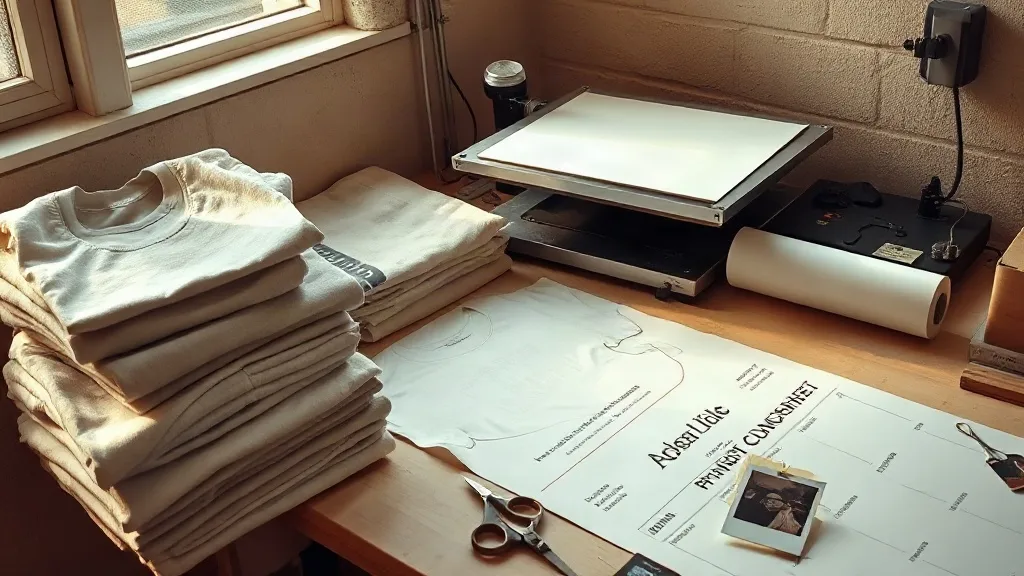
Most print shops don't lose money on the first Shaka Wear order. They lose it on the third or fourth, when a reprint comes in and nobody can remember which press settings, which transfer supplier, or which gangsheet layout produced the shirt the customer loved. The blank was fine. The transfer was fine. The workflow around them wasn't. That gap is where a good shaka wear program either holds together or quietly falls apart, and it's the part most guides skip.
This piece is about that middle layer: the boring, repeatable steps between "customer sends artwork" and "box leaves the shop." If you already know how to press a DTF transfer, you don't need another primer. You need a system that survives a Monday with eleven jobs on the board.
Why Shaka Wear Blanks Reward a Disciplined Workflow
Shaka Wear's heavyweight tees have a reputation among printers for a reason that has little to do with hype: the fabric is dense, the surface is consistent, and the garment doesn't fight you during pressing. A dense cotton face means the transfer sits on top of the weave instead of sinking into it, which is exactly what you want from a DTF application. A thinner, slubby blank will swallow detail and leave you guessing whether the edges are sealed.
That consistency is only useful if you treat it as a baseline rather than a variable. In practice, that means standardizing three things the moment a Shaka Wear style enters your catalog:
- A single reference garment per style. Keep one pressed, labeled sample of each Shaka Wear style and color you stock, with the press temperature, time, and pressure written on the tag.
- A fixed transfer spec. Same film, same powder, same curing routine for every order of that style, so a reprint matches the original without debate.
- A photo record. One phone photo of the finished print on the reference garment, taken under the same light every time, is worth more than a page of notes when a customer says "it looked different last time."
None of this is glamorous. All of it is the difference between a blank you reorder confidently and one you quietly stop offering because it "gets inconsistent."
Building Gangsheets Around Garment Sizes, Not Just Artwork
Here's where most shops leave money on the table. A gangsheet is usually built around artwork: fit as many logos as possible into the available film area. That's the wrong starting point when you're printing on heavyweight blanks for a real order.
Start with the size breakdown of the job instead. A run of 40 shirts that's 8 small, 18 medium, 10 large, and 4 XL needs 40 prints, but the artwork sizes rarely scale linearly. Chest prints that look right on a medium can crowd a small and look undersized on an XL. If you build the sheet first and then discover you need three artwork scales, you're redoing the layout with the clock running.
A DTF Gangsheet Builder solves the mechanical part of this by letting you lay out multiple sizes and designs on one sheet and see the film usage before you commit. The workflow habit that matters, though, is deciding your size scale rules before you open the builder:
- Set a standard chest print width for small through large, and a second width for XL and up.
- Group the job by artwork scale so each sheet carries one scale, not a mix.
- Leave a consistent gutter between prints, wide enough that your cutter or trim routine never nicks a neighbor.
- Add a small corner test print on every sheet. It costs almost nothing and tells you instantly if the film or powder batch is behaving.
Shops that adopt this pattern typically find they waste less film and spend far less time reprinting individual pieces, because a bad sheet is caught before it reaches the press rather than after.
A note on nesting and color
Nesting prints tightly is tempting, but on dark Shaka Wear garments with light artwork, edge quality matters more than film savings. Give white-heavy designs a little more breathing room. The extra inch of film is cheaper than a reprint on a heavyweight tee.
Press Settings That Travel Well Across Shaka Wear Styles
Every shop has its own press and its own habits, so treat the numbers below as a starting point to test, not gospel. What matters more is that you record what worked and apply it every time.
For heavyweight cotton tees in the Shaka Wear range, a common working zone is a press temperature around 300 to 320 degrees Fahrenheit, a press time of 10 to 15 seconds for the main application, and firm but not crushing pressure. Peel warm or cold depending on your film's instructions, then a short second press under a cover sheet to lock the edges. If you're pressing a second side, use a pressing pillow or a folded towel inside the shirt so you don't flatten the first print or leave a seam impression.
Two adjustments are worth testing early:
- Pre-press the garment for a few seconds. Heavyweight cotton holds moisture, and a quick pre-press drives it out. Skip this and you'll occasionally see bubbling that has nothing to do with your transfer.
- Watch the collar and shoulder area. Those are the spots where uneven pressure shows up first, especially on oversized fits. A pressing pillow fixes most of it.
Stretch and recovery matters more than people think
Shaka Wear blanks vary in stretch depending on the style. On a stretchier tee, a print that's slightly under-cured will crack at the edges long before a properly cured one does. If you're testing a new style, press one sample, stretch it gently across the print, and look at the edges. If they lift, your cure needs attention before you run the order.
The Repeat Order Problem, and How to Solve It
Repeat orders are where a Shaka Wear program earns its keep. A customer who orders 30 tees in March and comes back for 60 in June is worth more than three new customers, and they expect the June shirts to look exactly like the March ones. That only happens if you've made the job reproducible.
Build a simple job card for every Shaka Wear order you fulfill. It doesn't need software. A printed sheet with the style code, color, size breakdown, artwork scale, film batch, press settings, and a photo of the finished garment is enough. File it by customer, not by date. When the reorder lands, you pull the card and you're running in ten minutes instead of reconstructing decisions from memory.
Two habits make this stick:
- Photograph every colorway. A heathered or garment-dyed blank can shift how a print reads, and customers remember the shirt, not the hex code.
- Keep a small stock of your top three Shaka Wear styles. Reorders often come with a short deadline. Having blanks on the shelf turns a two-week job into a two-day one.
Storage and Handling That Protects the Print
DTF transfers are sensitive to humidity, and heavyweight blanks take up space. Both facts cause problems in shops that store things wherever there's room. Film stored in a damp corner will print inconsistently, and cured prints stacked while still warm can pick up impressions from the shirt above.
Keep transfers in a sealed bag or bin with a desiccant pack, away from exterior walls. Let pressed garments cool flat before folding, and if you're bagging them, give them a minute. It sounds fussy until you've handed a customer a shirt with a faint grid pressed into the chest from the tee stacked on top of it.
Frequently Asked Questions
Do Shaka Wear heavyweight tees need different press settings than standard blanks?
Usually the settings are similar, but heavyweight cotton benefits from a short pre-press to remove moisture and from slightly longer dwell time to ensure even adhesion through the denser weave. Test one garment per style before running a full order, and record what worked.
How do I keep reprints consistent months after the original order?
Keep a job card per customer with the style code, color, artwork scale, film batch, press settings, and a photo of the finished print. File by customer rather than date so a reorder is a lookup, not a reconstruction.
Can I mix different artwork sizes on one gangsheet for a Shaka Wear order?
You can, but grouping by artwork scale usually produces cleaner results. Build separate sheets for small through large and for XL and up, so each sheet carries one consistent scale and you avoid re-laying out mid-job.
What causes edge lifting on DTF prints on heavyweight tees?
Most often it's under-curing, uneven pressure around collars and shoulders, or pressing over a seam without a pillow. A quick stretch test on a sample will tell you whether the cure or the application is the problem.
Is it worth stocking Shaka Wear blanks in advance?
If you get repeat orders, yes. Keeping your top three styles and colors on the shelf shortens turnaround dramatically and lets you take rush jobs you'd otherwise decline.