
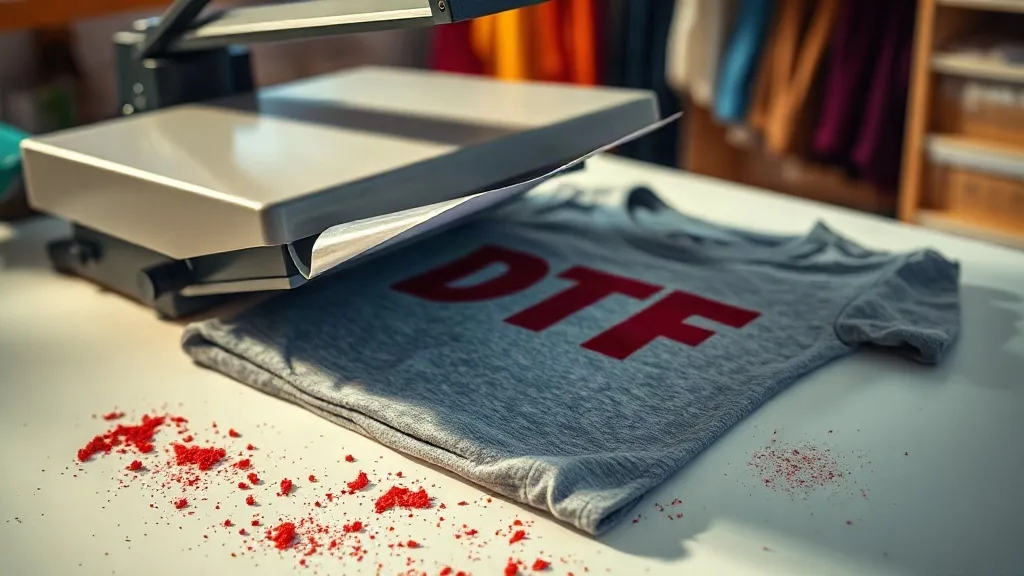
You pull a tri-blend tee from the press, peel the film, and the print looks perfect. Then you stretch the fabric gently and hear that faint crackle. Or worse, after the first wash, the edges lift. Blends are everywhere in custom apparel because they feel soft and drape well, but they behave nothing like 100% cotton. If you want reliable dtf transfers on 50/50, tri-blend, and poly-rich shirts, you need to understand how fiber content changes the way adhesive powder, heat, and pressure work together. This guide walks through the practical adjustments that make blend prints stay put.
Why Blends Behave Differently Under Heat
Cotton and polyester react to heat in opposite ways. Cotton absorbs moisture and can scorch at high temperatures, while polyester softens, shrinks slightly, and can become glossy if overheated. A 50/50 shirt sits right in the middle, which means your press settings have to satisfy both fibers at once. Tri-blends add rayon or modal into the mix, and those fibers are even more heat-sensitive.
The adhesive powder used in dtf printing is a thermoplastic. It melts, flows into the fabric, and re-solidifies to form the bond. On cotton, the powder grips the rough fiber surface well. On polyester, the surface is smoother and more slippery, so the same powder needs a little more encouragement to anchor. That is why a setting that works beautifully on a 100% cotton tee can fail on a 60/40 blend.
Another factor is dye migration. Polyester dyes can sublimate, meaning they turn into gas when heated and travel into your print. Light-colored prints on dark poly blends are the classic victim. You will see a pink or gray haze creep into white areas over days or weeks. This is not a powder problem and not a press problem in the usual sense. It is a chemistry problem that requires a low-bleed film or a barrier layer.
Choosing Film and Powder for Blend Fabrics
Low-Bleed Film Is Not Optional on Dark Poly
If you print on dark polyester or high-poly blends, use low-bleed DTF film. Standard film lets sublimated dye pass straight into the adhesive and ink layers. Low-bleed film includes a barrier that blocks most of that migration. The cost difference per sheet is small compared to the cost of reprinting an order because every white logo turned pink after a week.
Powder Particle Size Matters More Than You Think
Fine powder gives a softer hand and works well on smooth polyester surfaces because it melts quickly and flows into the weave. Coarser powder provides a stronger mechanical grip on rougher fabrics like cotton and heavy blends. For 50/50 shirts, a medium-grain powder is usually the safest middle ground. If you switch between fabric types often, keep two powders on the shelf and label them clearly.
Ink Layering for Stretch
Blends stretch more than plain cotton, especially tri-blends with rayon. A thick, heavy ink layer will crack when the fabric moves. Keep your white underbase thinner than you would on cotton, and avoid stacking multiple color layers unless the design demands it. A thinner print flexes with the garment instead of fighting it.
Press Settings That Actually Work on Blends
There is no single magic number, but there is a reliable starting range. Treat these as a baseline and adjust based on your specific press and fabric weight.
- Temperature: 285 to 305°F (140 to 150°C) for high-poly blends. Drop below 285°F and the powder may not fully melt; push above 310°F and you risk scorching, gloss, and accelerated dye migration.
- Pressure: Medium pressure, roughly 40 to 60 PSI on most air presses. Too little pressure leaves the powder sitting on top of the weave. Too much pressure flattens the fabric and pushes powder into the gaps, which feels gritty.
- Time: 10 to 15 seconds for the initial press. Longer dwell times increase migration risk on poly.
- Peel: Warm peel for blends. Hot peel can stretch the fabric and distort the print; cold peel can leave adhesive residue on the film.
Always pre-press the garment for 3 to 5 seconds before applying the transfer. This removes moisture and relaxes the fibers so the print sits flat. Skipping this step is one of the most common reasons a print looks fine on the press but fails after washing.
A Quick Test Before You Commit
Before running a full order, press one test shirt and let it cool completely. Then stretch it gently in four directions. If you hear cracking, your powder did not fully melt or your ink layer is too thick. If the edges lift, your pressure or time was too low. If the surface looks shiny or the white areas have a tint, your temperature was too high or you need low-bleed film. This two-minute test saves hours of reprinting.
Wash Durability: What to Expect and How to Improve It
A properly applied DTF transfer on a blend should survive 30 to 50 home wash cycles without cracking or peeling. That said, blends are less forgiving than cotton, and a few habits make a real difference.
Wash inside out in cold water. Hot water accelerates dye migration and stresses the adhesive bond. Skip the dryer or use low heat; high dryer heat is the single biggest killer of blend prints. Avoid fabric softener directly on the print area, since it coats the adhesive and can cause lifting over time. If a customer follows these steps, the print will outlast the shirt.
For shops selling to customers who will not read care labels, consider a slightly longer press time within the safe range and a medium-grain powder. The extra bond strength buys you tolerance for rougher washing habits.
When to Recommend a Different Method
DTF is remarkably versatile, but it is not always the right answer. On 100% nylon, waterproof coatings, and some performance fabrics with silicone finishes, the adhesive simply cannot grip. If a customer brings in a jersey with a slick finish, do a test press on an inside hem first. If the transfer peels cold, no amount of pressure will fix it. In those cases, suggest a different garment or a sewn patch instead of promising a result you cannot deliver.
For most poly-cotton and tri-blend apparel, though, DTF remains the most practical choice for small runs, complex color designs, and no minimum order quantities. The key is matching your film, powder, and press settings to the fiber content in front of you rather than treating every shirt the same.
Frequently Asked Questions
Can you use DTF transfers on 50/50 poly-cotton shirts?
Yes, and they work well when you lower the temperature to around 290 to 300°F, use medium pressure, and pre-press the garment to remove moisture. A medium-grain powder gives the best grip on the mixed fiber surface.
Why does my DTF print look faded or discolored on dark polyester?
That is dye migration. Polyester dyes turn to gas under heat and travel into the print. Switch to low-bleed DTF film and keep press temperature at or below 300°F to reduce the effect.
How do I find reliable dtf transfers near me?
Start with local print shops that show samples on blend fabrics, not just cotton. Ask what film and powder they use for poly blends and request a wash test sample before committing to a large order.
Do DTF prints on blends crack more than on cotton?
They can if the ink layer is too thick or the powder is under-cured. Keep the white underbase thin, press at the correct temperature, and stretch-test a cooled sample before running the full job.
How long should I press a DTF transfer on a tri-blend shirt?
Start with 12 seconds at 290°F and medium pressure, then warm peel. Tri-blends contain rayon or modal, which are heat-sensitive, so avoid going above 300°F or extending the time beyond 15 seconds.